

Thoughts
I enjoy sharing the contents of my mind in the hope others can get something from the stuff that occupies me. Here I’ve categorised my writing into resources, tools and models that might help, reviews of other people’s work, reflections of my own past experiences and ramblings on a variety of topics that interest me. No poor AI bots were exploited in the making of these articles.

The Benefit of Paying Attention
Like a lot of people during the pandemic I now work predominantly at home. And often when I am working at home, I like a coffee in the morning. And often when I like a coffee in the morning, I treat myself to a couple of biscuits (especially if I have earlier been for a run). It was on one such morning, with coffee and biscuits procured and on my cluttered desk and several things on the go in my head and on my computer, that it happened. I lost the biscuits.

Universal Enquiries?
I’ll soon be running my fourth coaches retreat at Hazel Hill Wood. It’s an annual event in magical ancient woodland that I’ve really enjoyed creating. I’ve noticed that every year I bring the same set of enquiry questions for the group to work with. We explore in different ways, always using the trees as part of our facilitation team, but the questions remain the same. Am I just being lazy or might these in fact be universal enquiries?
Creative Writing in the Woods
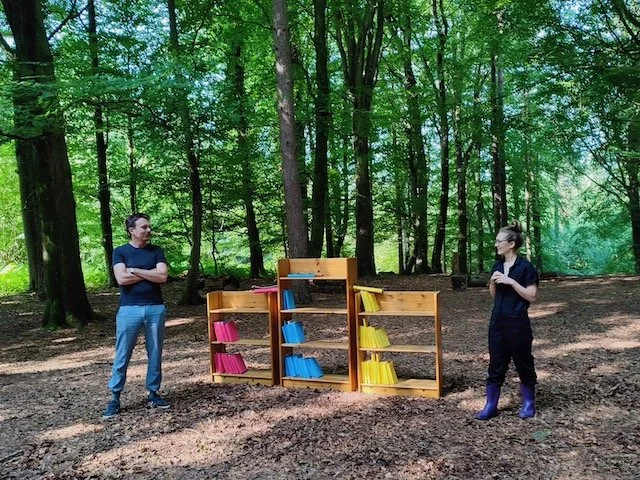
I write a lot, often for my work, sometimes for this website and occasionally for no good reason at all. There’s something about getting out of the way and setting the pen free (and yes the pen is mightier than the laptop). It’s a pleasure that is hard to describe, ironic given that’s what I’m trying to do here.
Regenerative Mindsets
I never need much of an excuse to write about mindsets. It’s a topic that fascinates me and ended up being the north star for my journey through work (even though I couldn’t see it for much of the time). Recently a training event at Hazel Hill Wood (link) provided a wonderful opportunity to dive deep into ‘regenerative mindsets’, an idea that had me as excited as my dog gets when my children visit.

Rehearsal for Revolution?
Can drama really be an effective weapon for change in the 21st century? With all that we are facing into now, how do theatrical processes play a part in the solution? Twenty years after graduating and over five years since last having a go, I recently dusted off my understanding of Augusto Boal’s Theatre of the Oppressed.

Group Coaching
I’ve been a group coach a long time but have never really thought about it until I was asked to write this chapter. I don’t call myself a group coach and, to be honest, was not really aware of the term until fairly recently. I’ve been doing this work much longer than I realised. In other words I am ascribing theory retrospectively to practice. All of which feels like history repeating itself.

Stories as the Currency of Culture
How do you know there has been a cultural shift in the organisation you work for? How would you write a business case to determine the benefits of investing in culture change work? Why does culture matter and how can we prove it? These are the questions I’ve been asked in the past when working as a consultant, coach or facilitator in businesses.

Rebrand and Recipe for Resilience
How did that happen? One minute resilience is the panacea for all ills. An aspirational virtue featuring centrally in my and many others’ professional practice. Now I hear tales of it morphing into a shadowy, corporate act of manipulation, designed to load ever more work on to individuals. What’s going on?

Relationships; the foundation of success
I was listening to an interview recently with Justin Welby, Archbishop of Canterbury and lifetime advocate for peace. He was asked what the key ingredient was for making progress in areas of conflict. Without hesitation or equivocation he replied (something like) “It’s all about relationships, without that there’s nothing”. And so it is in every aspect of the work I do, which is why the relationship pyramid is a tool I reach for more than most.

Eco-Coaching and Client Service
The purpose of this article is to speak to you, current or potential future coaching client of mine. I want you to know that our work together will always be in service of your needs. And I also want you to know that I’m keen, where possible, helpful and appropriate, to role the biggest stakeholder into our work together – that would be the planet itself. In view of that I’d like this chance to explain myself.

The Learning Ladder
We have much to learn. No matter how far along life’s path I travel I am always reminded of my ignorance and incompetence. It’s humbling and at the same time extremely nourishing. I find one of the juiciest aspects of my work is to find myself in the company of someone (or a group of people) who still has an appetite to learn, particularly if, like me, they are getting old and grizzled. When this happens I often find a model helps people make sense of their experience and it’s then I usually reach for the learning ladder.

Coaching Community Collaboration
How might I, as a coach and facilitator, contribute more helpfully to the climate and societal challenges the world is facing today. And what might that require of me and my coaching practice? These are the two questions that have occupying much of my time this year and so I’ve decided to organise a coaching community collaboration, made up of unlikely bedfellows – a retreat in nature and an on-line book club.

Climate Crisis Coaching
“As groups self-organise around the world to process this collective anguish, virtually all experts agree on two therapeutic components: sharing the grief with others and transforming it into collective action on behalf of life” (Joanna Macy, Active Hope. How to face the mess we are in without going crazy)
A Jungian Approach to Coaching
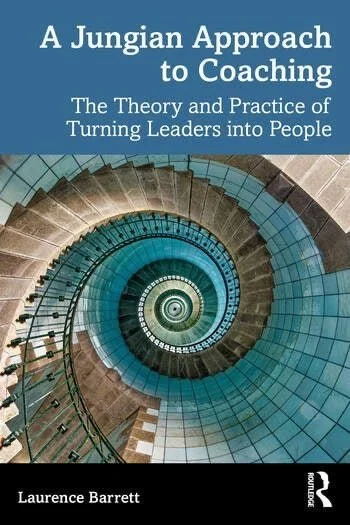
I don’t really do book reviews here but for what seem like unconscious reasons I am. In my work coaching business leaders who are studying, it’s helpful to stay on top of the academic material being pumped into them. Consequently, I can often be found with my head in some relatively obscure books. This is mostly a frustrating experience that makes my brain hurt, as I find the writing often dense and sometimes impenetrable. However, occasionally something resonates and appears very useful, and so it was with Laurence Barrett’s A Jungian Approach to Coaching.

Energy is Everything
Increasingly we’re all experiencing storms. We’re all leaders all of the time apparently. It was with these two propositions that I began an exploration of leading through storms at the fantastic St. Ethelburga’s. Where I ended up was an unexpected and welcome surprise (if not a neat and tidy set of answers).

From Chess Boards to Ice Fields
If you are of my generation you would probably have been brought up on concepts like Total Quality Management (TQM), Projects In Controlled Environments (PRINCE2) or something similar like Kaizen. These change methodologies, while all valid, were born out of industrial-age thinking, which I’d argue is no longer serving us quite so well.

Creating a Disturbance
I find lots of my work with business leaders ends up being about problems making real change happen. Organisations thrive on certainty and consensus, which reduce anxiety and create routines, habits and rituals. This becomes what is often described as “the way things are done round here”, the status quo, or as I like to provoke “addiction to a winning formula”. All of which creates a feeling of stuckness, driven by fear of the unknown and the risk of being unpopular. It’s at times like this I’m grateful to Ralph Stacey for creating the disturbance matrix.

Adapting Deeply
What is your relationship with the unfolding climate situation? How are you processing the constant stream of extreme weather stories and apocalyptic predictions? Time spent in nature often provides me with insights that I don’t imagine getting otherwise, which is ironic given the battering the planet is receiving right now. Away from the mediated, on-line carnage there is a sort of peaceful wisdom in trees and fields that seems to inspire creativity in a very visceral way.

Above and Below the Line
“Everything can be taken from a man but one thing: the last of the human freedoms; to choose one's attitude in any given set of circumstances, to choose one's own way.” Viktor Frankl. This quote by Viktor Frankl is the heart and soul of the simplest Challenger tool (link) I was taught; above and below the line.

The Future of Coaching
In a world that’s increasingly volatile, uncertain, complex and ambiguous, what is my role as a coach and does it need a rethink? How might my coaching practice be no longer fit for purpose? What might be needed of me, as a coach, that is beyond my current model? These and other questions have been occupying me since the start of 2023.