
Rehearsal for Revolution?
Can drama really be an effective weapon for change in the 21st century? With all that we are facing into now, how do theatrical processes play a part in the solution? Twenty years after graduating and over five years since last having a go, I recently dusted off my understanding of Augusto Boal’s Theatre of the Oppressed.
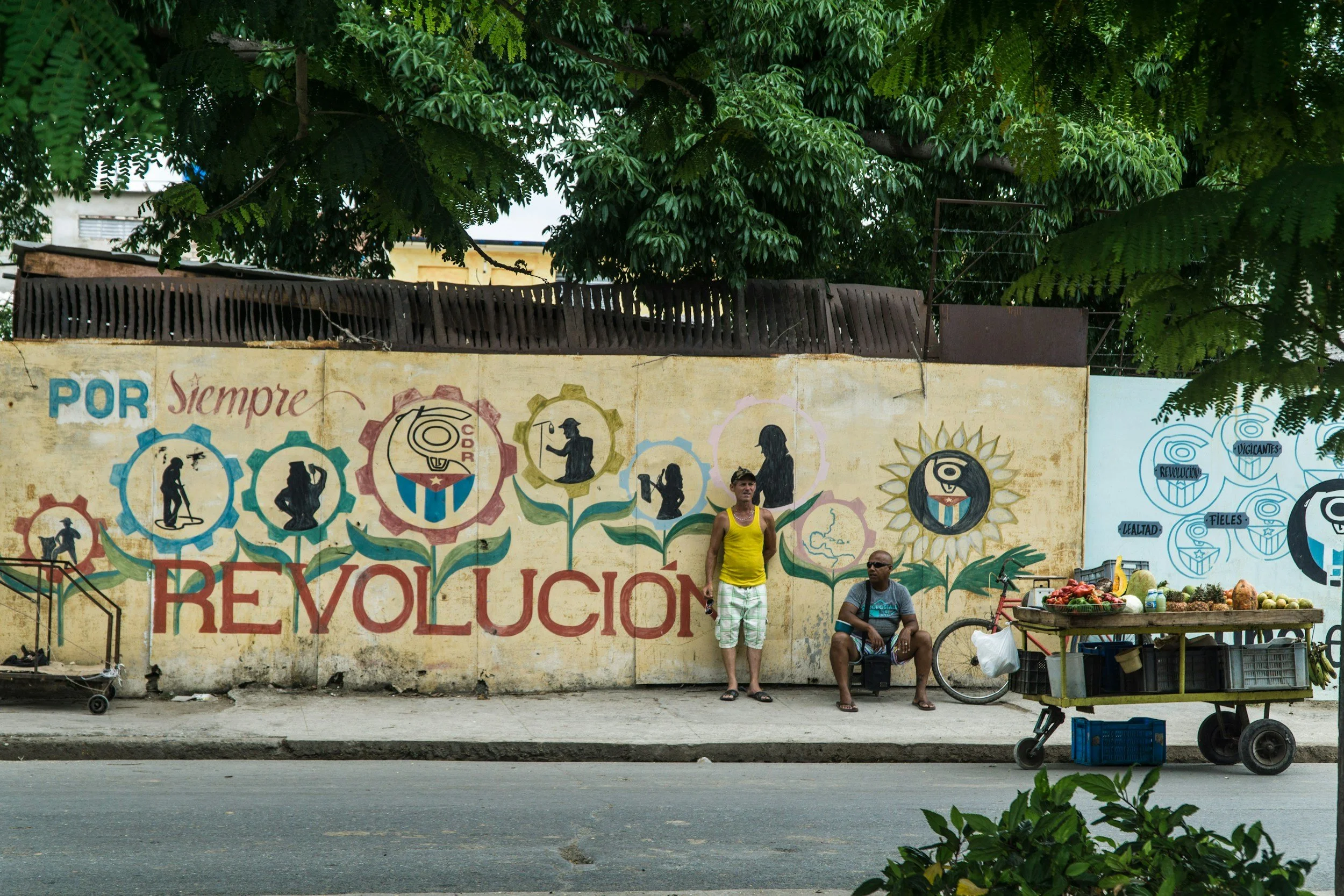
In the intervening years I’ve managed to incorporate drama and play techniques into my coaching and facilitation practices, but I’d never been offered the chance to run a full-blown day-long Boal workshop…until a recent fireside chat led to me being invited to facilitate a development day for the Association of Facilitators. Whether I had happened to say the right thing at the right time (possibly) or oversold my capability in this area (more likely), the chance to resurrect my socialist, drama-based history opened up in front of me. It was with much anxiety that I re-read my old material, and dug out some much-loved, dog-eared props. I kept telling myself, to quote Fritz Perls, “Anxiety is just excitement without the breath” but I’m not sure I believed it.
As it turned out the day could not have gone better. I was lucky to be in a fantastic central London venue in the company of a creative, enthusiastic group of facilitators from the Association. The basement kitchen threw up an unexpected pre-start opportunity to try a little light-touch invisible theatre (google or read the books to know more) and then we were off and running.
My main theoretical input at the start of the day was decoding – backwards - the title of the workshop, Theatre of the Oppressed, Rehearsal for Revolution, and I’ll repeat that here as it’s probably the easiest way to give a taste of the work.
Revolution. Augusto Boal was a South American theatre maker, whose work focused on creating social change in places where revolution was sought. So, for him, operating in poor countries in the second half of the twentieth century, ‘revolution’ was in the air. For us, now, in relatively stable western democracies, revolution of course means something else. I’d argue though that the last ten years have been destabilising, uncertain and increasingly divisive, giving Boal’s work a more contemporary context.
Rehearsal. Such was the power of Boal’s work, participants often mistook his drama for the actual revolution, famously asking ‘where are the guns?’ at the end of one workshop. This work is about imagining and devising creative solutions to seemingly intractable problems and trying them out in a safe space. It is practice building embodied experiences of change and muscle memory for action. But it is not the revolution itself, which Boals was keen to stress takes place in the real world and not a drama studio.
Oppressed. Boal’s work centred around the conventionally oppressed (poor people in ghettos and slums) but not exclusively and he often applied his methods in more affluent circumstances. So, what is it to be oppressed? And how might that apply to you and me? The dictionary describes oppressed as “subject to harsh and authoritarian treatment” For the relatively affluent, educated people I work with it’s a bit of a stretch but look around and you will find the evidence of your own oppression. This is the material to work with.
Theatre. It seems obvious but at its heart this work is about the magic of the theatre and the dramatic arts. It’s easy to get serious and earnest with the material being worked on. Drama workshops work because they can be both serious and fun, immersive and reflective, anarchic and structured.
As for the day itself, we played, we watched, we experimented, we played, we created, we talked, we played some more. We recreated real issues that the group experiences in their lives, whether that be family dynamics or professional engagements, and we worked on breakthroughs and sometimes solutions. And did I say we played?
Above all, this work is experiential, creative, embodied practice and the irony is not lost on me that I’m trying to explain it via words on a laptop. So perhaps I’ll give up and finish with a quote from a participant:
“The Learning Day on Theatre of the Oppressed with Nick gave me lots to think about with regards to how, as a facilitator, I can use theatre tools and play, to support groups and clients. In particular, how we might approach sessions, as a safe space for practice and play, before making change in the real world. Not only was it hugely useful, in terms of the learning and tools I've taken away, but it was immensely fun!"
My two (no longer dusty) reference books, both by Augusto Boal himself (though translated by others)
Theatre of the Oppressed
Games for Actors and Non-Actors